Agriculture is more than the backbone of Uganda’s economy; it is the lifeline of millions. With a population nearing 48 million, over 70% living in rural areas, Uganda depends heavily on smallholder farmers for food, income, and livelihood, according to a report by the Food and Agriculture Organisation of the United Nations. Yet while rainfall, fertile soils, and two cropping seasons seemingly set the stage for abundance, climate change has turned predictable growing cycles into precarious bets.
Droughts, unpredictable rainfall, and rising temperatures are now recurring threats. According to World Bank reports, climate risks threaten to cut Uganda’s economic growth by up to 3.1% by 2050, pushing hundreds of thousands into poverty unless adaptation measures are scaled up. Agriculture remains almost entirely rain-fed: only about 2% of agricultural households use any form of irrigation. This leaves smallholder farmers highly vulnerable to dry spells and erratic rainfall.
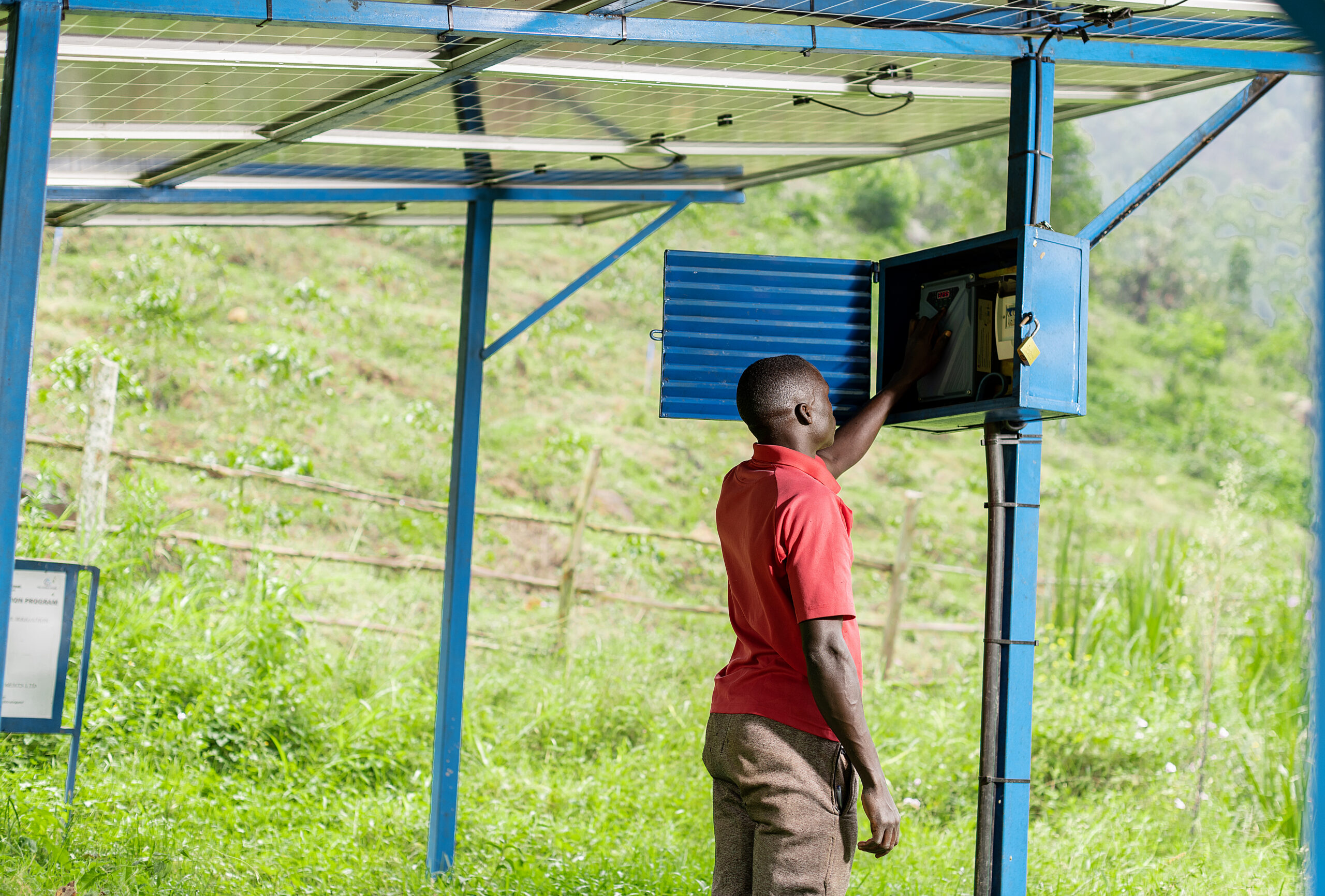
In this context, the Uganda Investment Fund for Transformation (UgIFT), supported in part by World Bank funding and aligned with Uganda’s National Irrigation Policy, introduced its micro-scale irrigation program. The program targets smallholder plots of up to 2.5 acres (≈ 1 hectare) per farmer and provides subsidised or co-financed equipment (solar‐powered or petrol/diesel pumps, drag hoses, drip systems), together with training, demonstration farms, and extension support.
Voices From the Field
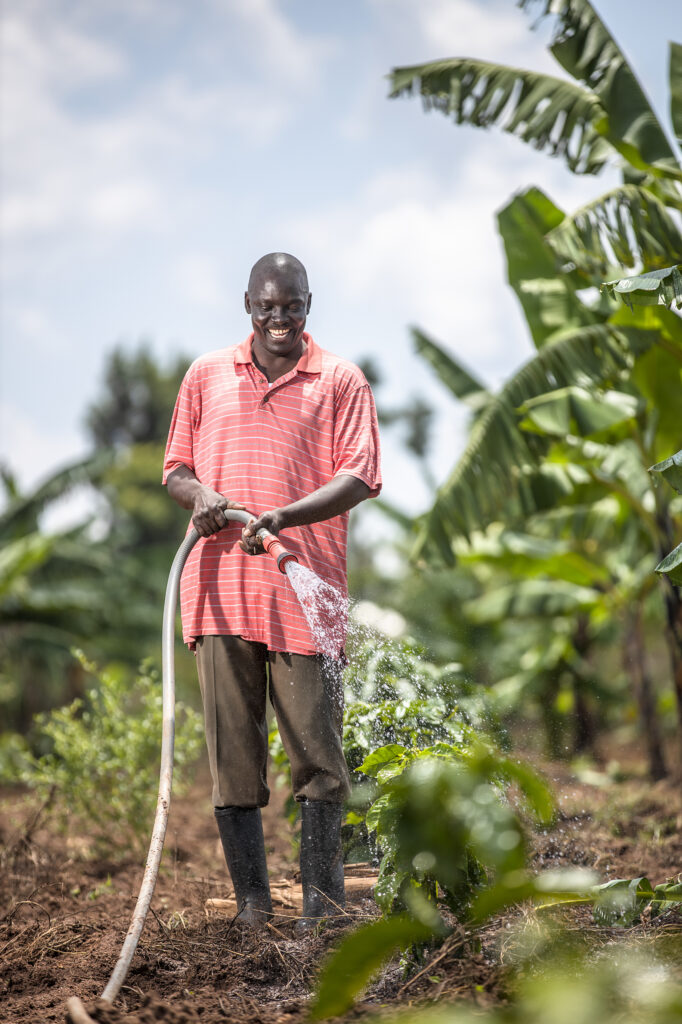
Stephen Okurut is 44 and tends a 2.5-acre farm in Bukedea. Coffee, bananas, and groundnuts used to be his staples; now he is adding tomatoes and onions, thanks to micro-irrigation.
“When I first planted matooke, the soil was exhausted. We had only one borehole, and I carried ten jerrycans of water each morning for just ten plants, each needing about 120 litres a day. It was exhausting. But giving up was never an option.”
After receiving a solar-powered drag hose system from UgIFT, Stephen saw his income rise from UgX 2 million to UgX 15 million per harvest. He no longer waits for the rain, planting year-round, and plans to expand.
Benadet Mushere, 63, farms in the steep hills of Nyamiyage, Rubanda.
“We had to hire young boys to carry water because we couldn’t manage it ourselves anymore. Farming was becoming too expensive and physically impossible.”
With drip irrigation, sprinklers, and drag hoses, her annual income from apples alone doubled from around UgX 2.5-3 million to UgX 4-7.5 million, enabling her to meet household needs and medical bills.
Fifty-year-old Jane Nankya, in Semuto Nakaseke, had years where yield barely matched investment.
“Watering was backbreaking work. The weather didn’t cooperate. We feared our farm would never give us the returns we hoped for.”
Her recent success under the program has been dramatic: from UgX 2 million to over UgX 25 million. Jane is now expanding her farm and planting high-value crops.
Program Mechanics and Broader Statistics
- The UgIFT micro-scale irrigation scheme co-finances systems: farmers typically cover 25% of the cost for solar-powered systems and 75% for petrol-powered ones, with government subsidy caps (e.g. max ~Shs18 million for solar pumps, ~Shs5 million for petrol pumps under some schemes)
- According to the Ministry of Agriculture, the program is limited to smallholder scale (up to 2.5 acres), aiming to help farmers move from purely subsistence toward more reliable, market-connected production.
- A value-for-money audit (2024) showed that in areas where farmers had irrigation equipment, revenues per acre increased modestly (from ~Shs 1.1 million to Shs 1.2 million) among beneficiaries. In contrast, for non-beneficiaries, revenue dropped sharply.
- Nationally, if irrigation adoption remained at the very low levels (≈2% households), large swathes of arable land would remain underutilised. Only 0.1% of farmers practice more formal or consistent irrigation, according to some statistics.
Transformation at the Grassroots
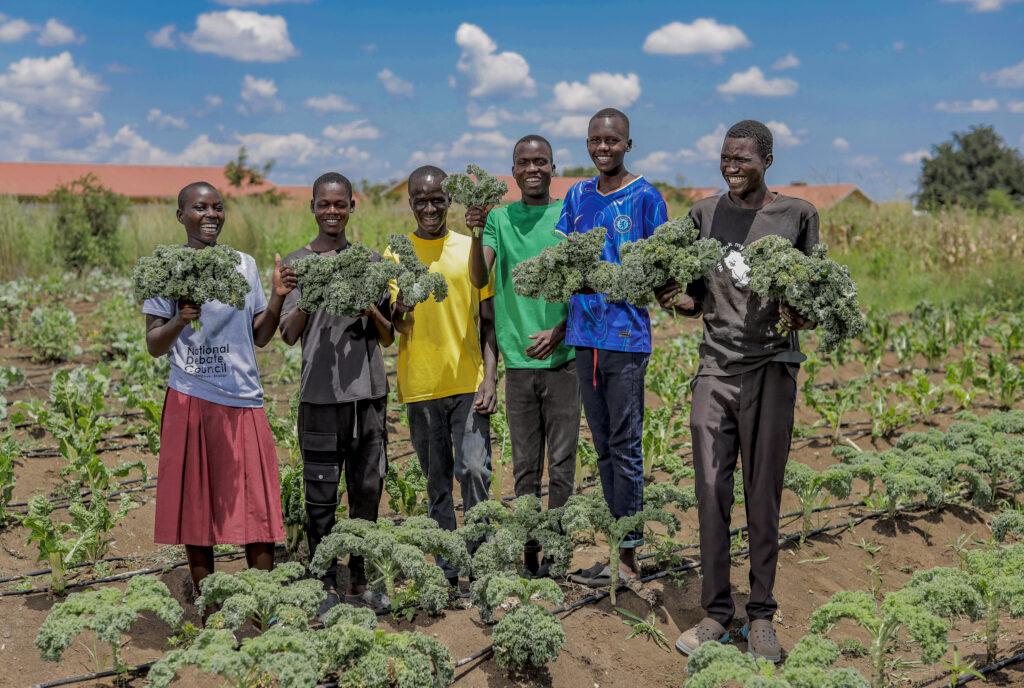
The program does more than supply kits; for Stephen, Benadet, and Jane, it has changed the rhythm of farming. Instead of waiting for rains, they now plant whenever conditions allow. The farmers’ yields are more stable; incomes are rising significantly. Costs of labour for carrying water, losses from drought, and crop failures are sharply reduced.
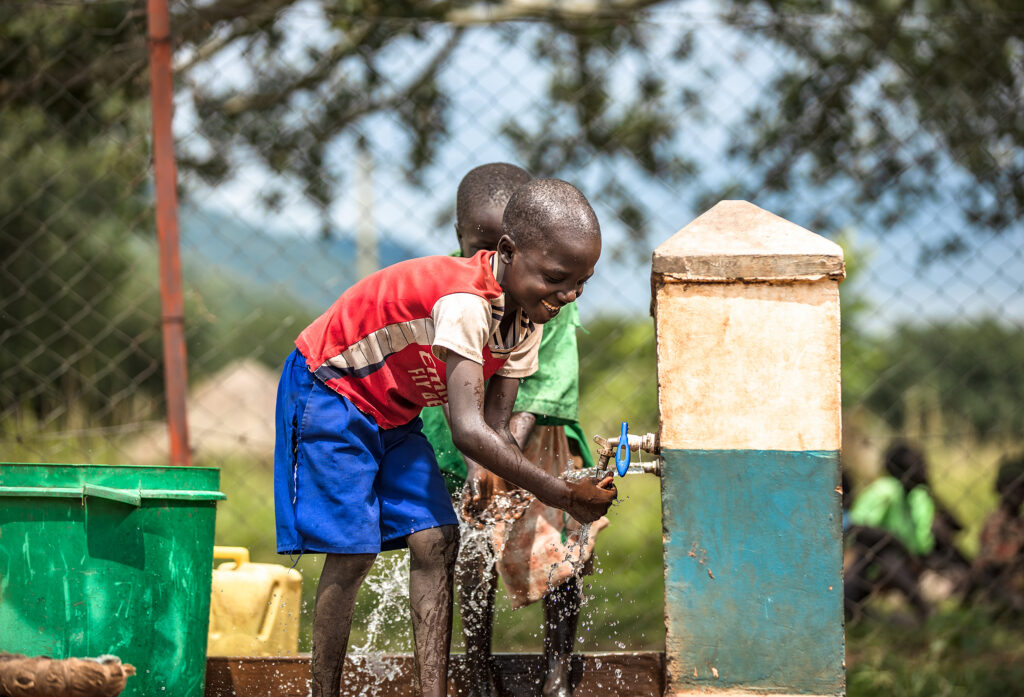
On the other hand, beyond income, the social impact matters: children can stay in school, health expenses are manageable, and families can plan. Stephen’s neighbours also benefit from his solar system, which often doubles as a communal water source.
Why this Intervention Matters
Climate change projections for Uganda suggest that, without adaptation, economic growth will face a drag; agricultural productivity will be increasingly volatile. Additionally, Uganda loses a large share of its productivity because of environmental degradation (41% of land degraded, soil erosion), which costs up to 17% of GDP. Lastly, increasing irrigation and climate-smart agricultural practices is a priority in Uganda’s National Development Plan II, and these schemes support value chains (horticulture, cash crops) that can respond to market demand and add export value.
Looking Forward: Resilient Farms, Resilient Futures
Participants in the UgIFT micro-irrigation program are not only growing more; they are changing expectations. The program’s bottom-up approach ensures that farmer voices guide technology choice, training, and deployment.
“Water shortages are a thing of the past,” Jane says. “I can now pay school fees, invest in healthcare, and expand my farm. Our lives have been transformed.”
“Drip hoses, solar pumps, it’s not just about having water. It’s about peace of mind,” Stephen reflects.
The gains are visible, but scaling remains essential. If more smallholders adopt micro-irrigation, Uganda can buffer its agriculture sector against climate shocks, reduce poverty, and improve food security. For stakeholders like the World Bank, it’s clear: targeted investment in climate-resilient agriculture yields economic, social, and environmental returns.