When Uganda launched the Micro-Scale Irrigation Program under the Uganda Intergovernmental Fiscal Transfers (UgIFT) initiative, the vision was clear: enable smallholder farmers to produce food consistently, even during the long dry seasons that have historically crippled agriculture. Today, the program stands out as a landmark intervention, not only for the number of farmers it has reached but for the systems and partnerships it has built along the way.
Engineer Kasozi Tondo James, a Principal Engineer at the Ministry of Agriculture, Animal Industry and Fisheries (MAAIF), has been at the forefront of the program’s design and implementation. She explains that the project was born out of the need to move farmers away from dependency on unpredictable rainfall and rudimentary irrigation practices, towards sustainable systems that make year-round production possible.
A Structured Approach
At the core of the program was a carefully designed process to ensure fairness, accountability, and effective delivery. Farmers who wished to participate first expressed interest through their district production departments. Senior agricultural engineers at the district level carried out sensitization campaigns, registered farmer details, and uploaded information into an e-track system developed for the project.
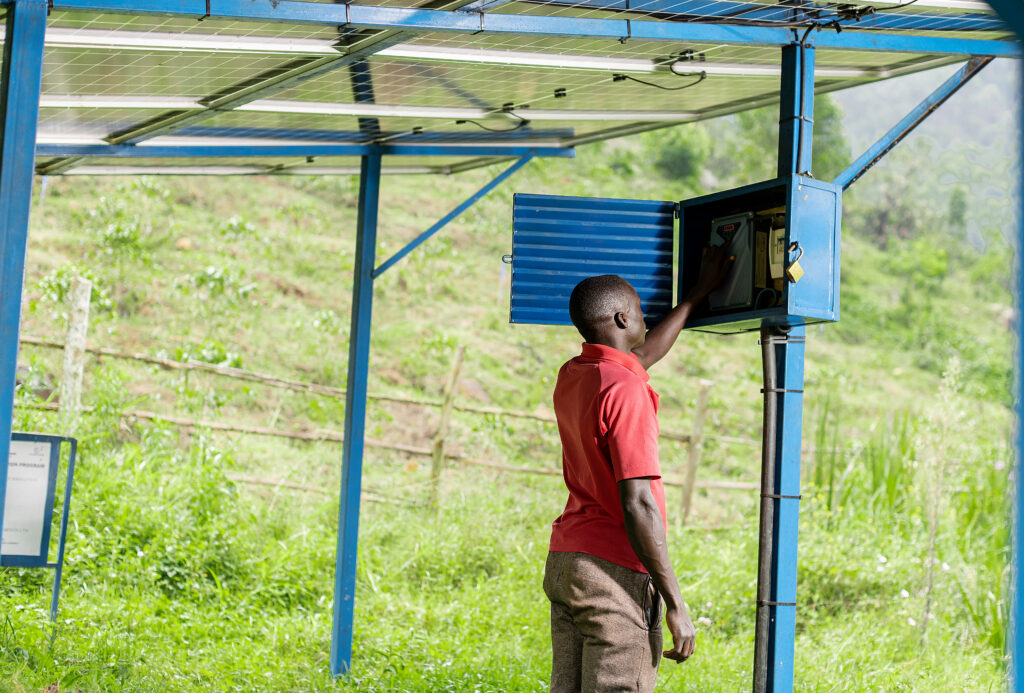
This system captured each farmer’s acreage, water source, and enterprise choice, then automatically generated cost estimates and calculated the farmer’s share of contribution. Being a subsidy program, farmers were expected to co-fund a portion of the system, depending on the type of irrigation chosen. Those who opted for solar-powered systems contributed 25 percent, while those requiring motorised, fuel-based systems contributed 75 percent.
“Transparency was critical,” Engineer Kasozi explains. “The e-track system ensured every farmer knew exactly what their contribution was, and it guided us in planning government top-ups to complete the package.”
From Payment to Implementation
Once a farmer’s contribution was assessed, payments were made directly into district accounts, not to individual hands to prevent misuse. Farmers then signed contracts with pre-qualified contractors who were responsible for delivering complete irrigation units, including pumps, distribution lines, and storage tanks.
Contractors accessed funds only after government co-funding was added, ensuring accountability. “The farmer never handled the money directly,” Kasozi emphasizes. “It created trust in the system and gave confidence that both their funds and the government’s contribution were safeguarded.”
Solar vs. Motorised Systems
While most farmers gravitated towards solar irrigation because of affordability and environmental benefits, not all landscapes were suitable. Solar systems can only pump efficiently within certain gradients and distances from water sources. For farms situated on higher ground or far from water points, motorized systems were the only feasible choice.
“It was a case of practicality,” says Kasozi. “We could not force a farmer to take a system that would not work for their land. In some cases, the motorised option, though more expensive, was the only one that could deliver water to the crops.”
Building Skills and Ensuring Sustainability
Implementation went hand in hand with capacity building. Contractors were required to train farmers in basic operation and maintenance of the systems. District engineers provided oversight, and irrigation technicians were engaged to handle technical support. Recognising the need for long-term sustainability, the program also trained community irrigation technicians drawn from within farming areas. These young men and women continue to provide repair and maintenance services even after the official program phase ends.
“From the beginning, we wanted to avoid a situation where equipment fails and farmers are stranded,” notes Kasozi. “Now there are skilled people within the communities who can keep the systems running.”
Inclusivity at the Core
Inclusivity was built into the program’s design. Women, youth, and persons with disabilities were encouraged to participate, and household consent was required to address land ownership concerns. By deliberately creating space for marginalised groups, the program ensured that the benefits of irrigation were not confined to a select few.
[Partnerships that Drove Success]
Several partnerships proved instrumental in implementation. Financial institutions were brought on board to support farmers who could not raise their contribution upfront. With letters of undertaking from districts, banks issued loans that were transferred directly to district accounts, further protecting the funds.
Contractors and local governments were also central, creating employment opportunities and strengthening institutional capacity. The program even spurred a rise in the number of senior agricultural engineers in the country, from just 30 before implementation to over 120 today.
[Results and the Road Ahead]
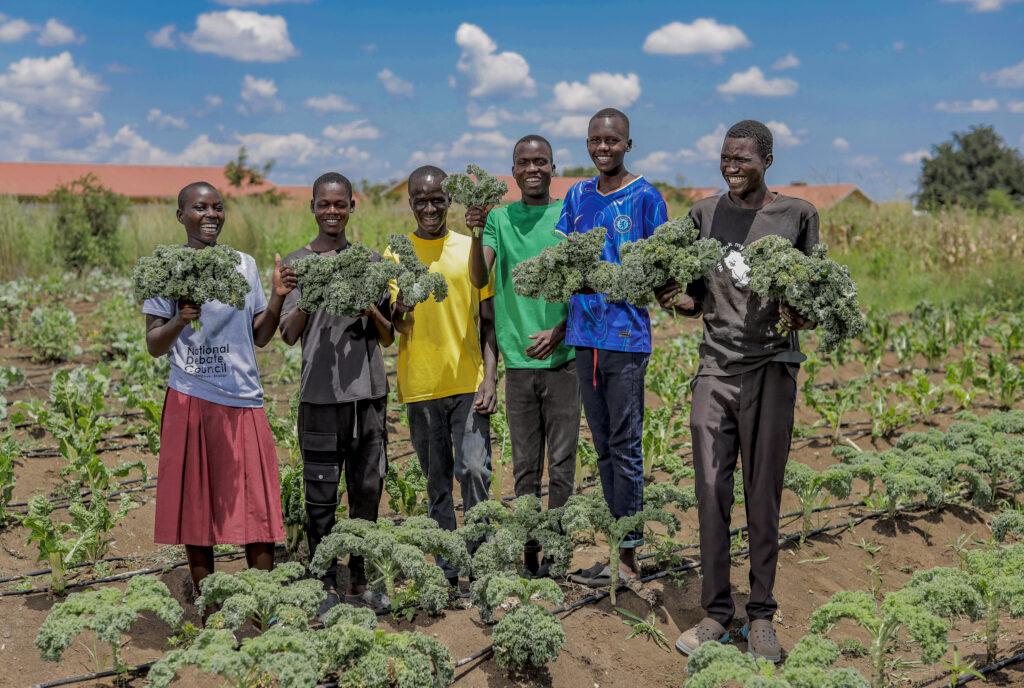
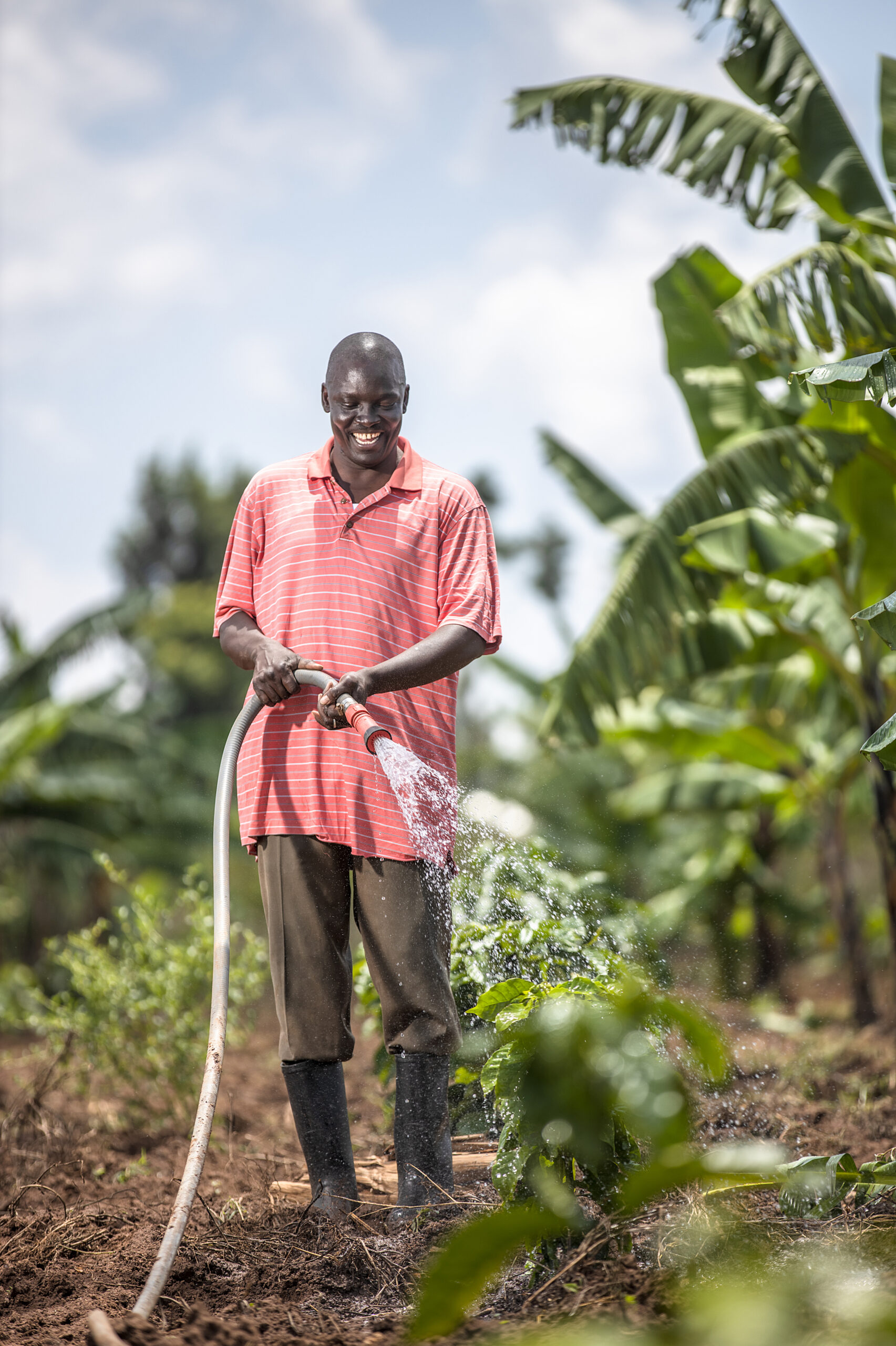
By June 2025, the program had aimed to support 5,000 farmers. It exceeded expectations, reaching 5,370 farmers across Uganda. The intervention has already changed how smallholder farmers approach production. Many now harvest throughout the year, shifting from survival farming to commercial opportunities.
Still, challenges remain. Some farmers struggled with the co-funding requirement. Others lacked permanent water sources, since constructing them was outside the program’s package. Land ownership issues also emerged, especially for tenant farmers.
Looking to the future, Engineer Kasozi explains that the successor program will seek to provide a more comprehensive package, including water source development alongside irrigation infrastructure. “We want to make sure that when a farmer joins the program, they get everything they need at once, from the water source to the storage tanks and the irrigation system itself,” she says.
A Lasting Legacy
For MAAIF and its partners, the Micro-Scale Irrigation Program represents more than an intervention, it is a model of how government, communities, and private actors can collaborate to solve one of Uganda’s most pressing challenges.
“The long-term benefit is simple,” says Engineer Kasozi. “Farmers can now produce throughout the year. That means food security, stable incomes, and resilience against climate change. That is the legacy of this program.”