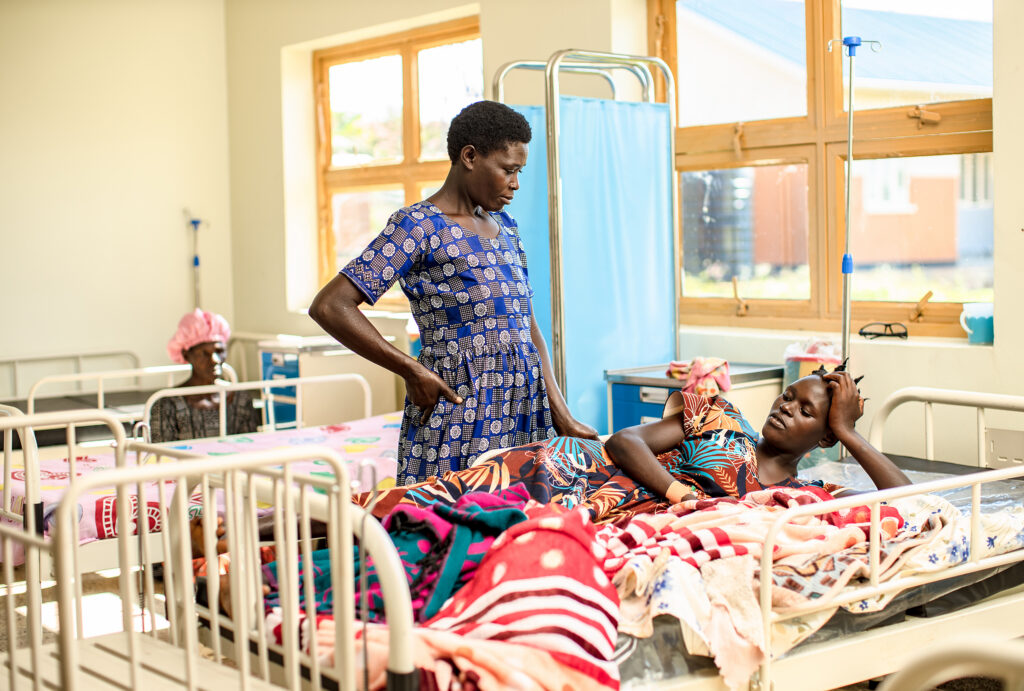
Nearly a decade ago, a World Bank review of Uganda’s education financing uncovered stark inequalities. Funding for learners was critically low, local governments had little control over how to spend the limited resources, and budget allocations were deeply uneven. Some districts thrived while others lagged far behind, leaving children in entire sub-counties with no access to government secondary education.
It was against this backdrop that the Uganda Intergovernmental Fiscal Transfers program, widely known as UgIFT, was conceived. Designed to correct inequities and strengthen service delivery, UgIFT sought to give local governments more discretion, increase funding adequacy, and promote fairness across the country. Under the Ministry of Education and Sports, the program’s education component has since grown into one of the most ambitious interventions in Uganda’s history.
“UgIFT is much more than the construction of schools. It is a comprehensive package that speaks to access, quality, and sustainability,” explains Derrick Namisi, Principal Economist at the Ministry of Education and the program’s focal person.
While the construction of government seed secondary schools has become the most visible face of UgIFT, the program’s scope stretches much further. Funding for learners has been doubled, raising the capitation grant from 10,000 to 20,000 shillings per primary school pupil, and from 40,000 to 60,000 shillings for secondary students. A new digital monitoring system known as the Teacher Effectiveness and Learner Achievement tool, or STELA, has been introduced to track teacher attendance and learner progress in real time. Teachers have also been recruited and deployed to underserved districts, easing the extreme pupil–teacher ratios that in some places exceeded ninety to one. At the same time, refugee-hosting schools are being integrated into the national system, guaranteeing displaced children the same right to education as their Ugandan peers.
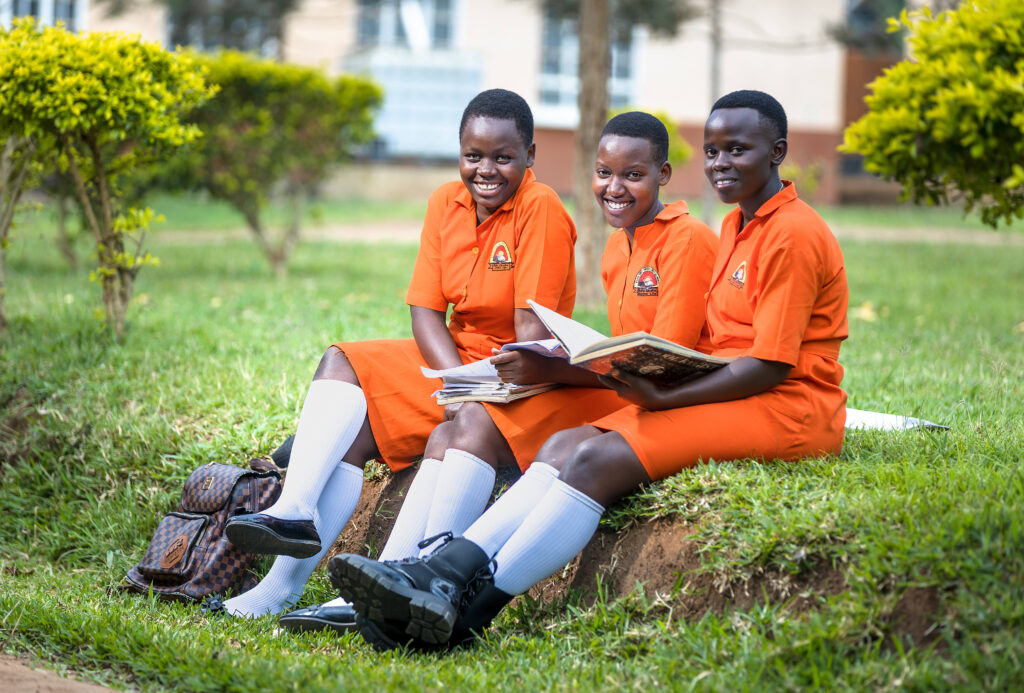
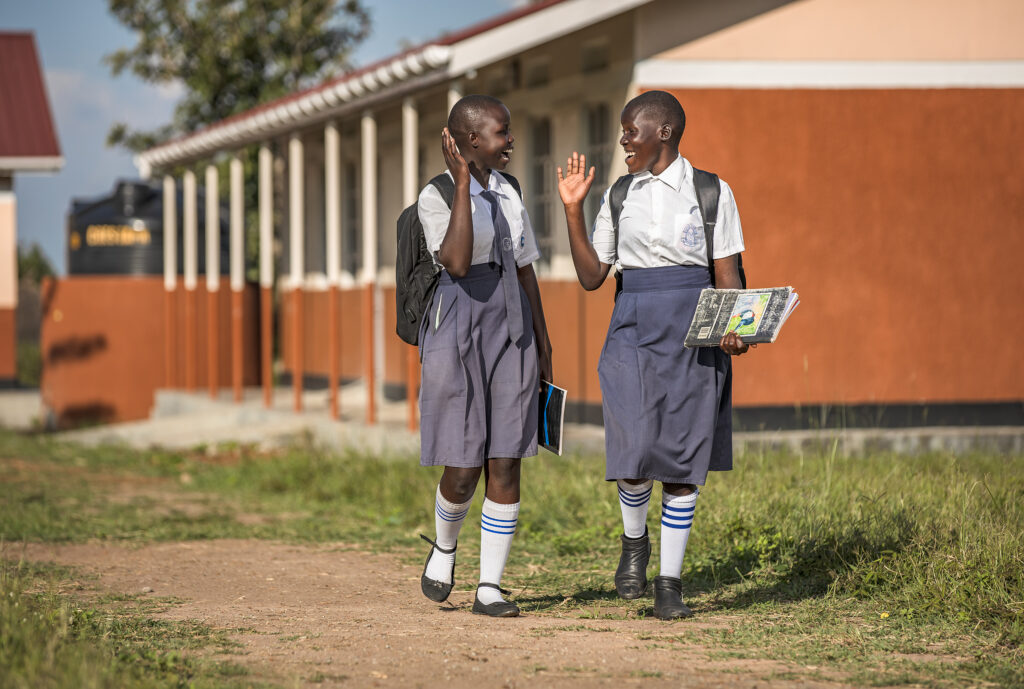
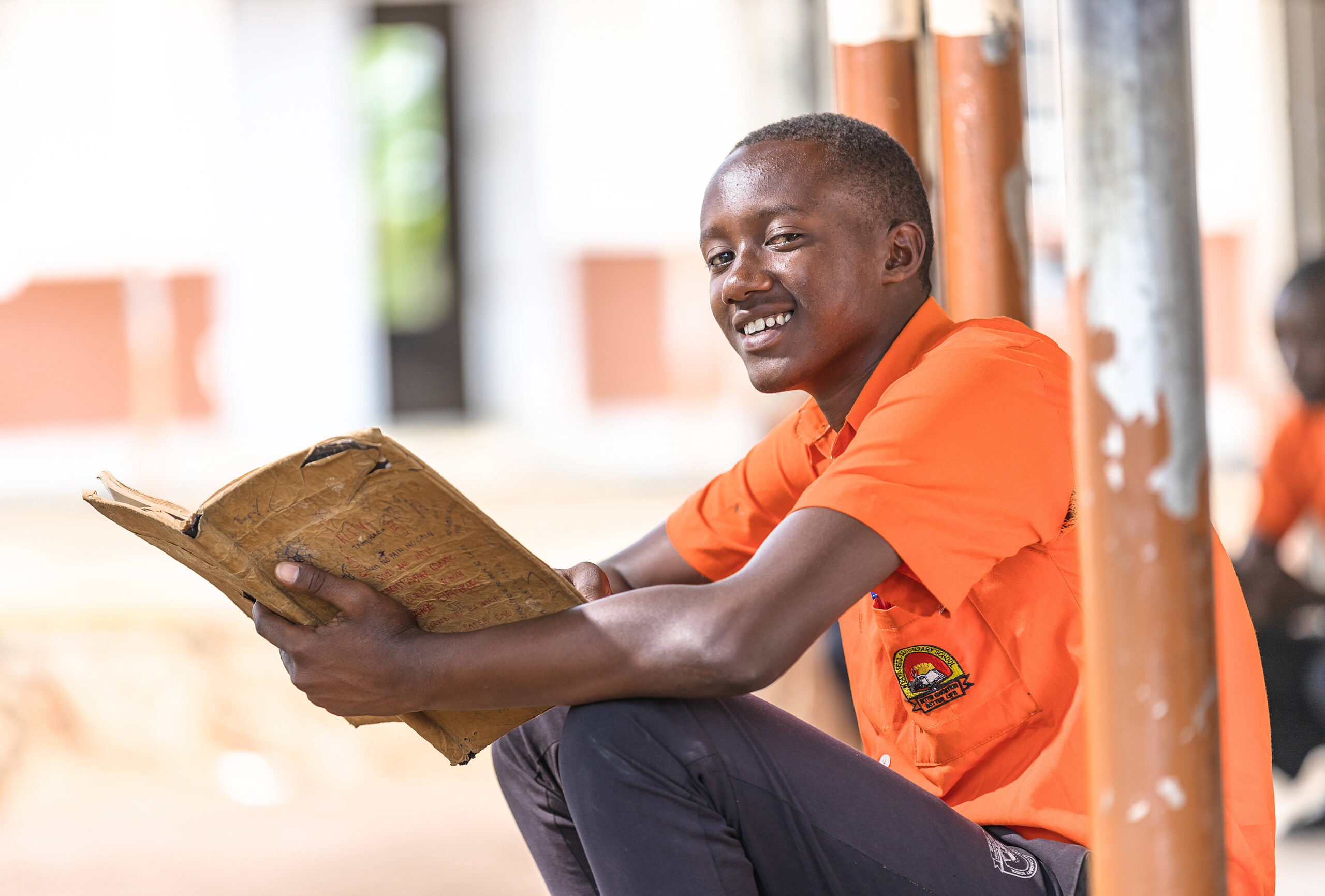
Despite this broad package, the construction of seed schools remains the centerpiece of the program. In total, 259 schools are being established in sub-counties that previously had none. Implemented in three phases, these schools are redefining opportunity for children who once had no nearby secondary school to attend.
The rollout began in 2018 but was slowed by two years of COVID-19 disruptions. Even with those delays, progress has been significant. Out of the 117 schools in the first phase, 111 are already operational, with the remainder nearing completion. In the second phase, 51 of the planned 115 schools are ready for commissioning while the rest are catching up. Construction of the final 27 schools began in 2023 and is expected to be completed by December. Each of these schools offers free education, equipped laboratories, and fully recruited teachers. “We are deliberately eliminating barriers,” Namisi explains. “These are not schools run by religious institutions that charge fees. They are universal secondary education schools, one hundred percent free, inclusive, and designed to serve every child.”
The results are already visible. Some sub-counties are recording their first-ever first grades in the Uganda Certificate of Education examinations. Enrollment has surged, with certain seed schools registering over one thousand learners, a remarkable figure for communities that previously had no access to secondary education. Beyond academics, the ripple effects are profound. In pastoralist areas, families are settling rather than moving with their cattle so that their children can attend school. In regions once plagued by practices such as female genital mutilation, education is offering new pathways and shifting cultural expectations. Rural economies are also benefiting, as roads, water facilities, and even electricity are extended to seed schools, creating opportunities that ripple far beyond the classroom. “Education is a catalyst,” Namisi reflects. “When you build a school, you are not just giving children a classroom, you are transforming the whole community.”
The design of the program has deliberately placed local governments and communities at its heart. Education is a decentralised service in Uganda, and so districts are entrusted with much of the responsibility for implementation. Local governments identify eligible sub-counties, oversee procurement, and sign contracts with contractors. Communities form local committees to monitor progress, safeguard construction, and ensure ownership. Contractors are encouraged to hire local labor, embedding schools even further within the life of the community. Meanwhile, the ministry provides engineers to supervise works, ensures procurement transparency, and steps in when disputes arise. This shared responsibility model has helped build trust and ownership, ensuring that the schools are not seen as external impositions but as community assets.
UgIFT has also introduced stronger safeguards to minimize harm during construction. Working closely with the Ministry of Gender and the National Environment Management Authority, each project undergoes environmental and social screening. Land is carefully verified to avoid disputes, schools are not built in wetlands, and community development officers have the authority to block contractor payments if safety standards are not met. This vigilance has prevented major incidents and reinforced confidence in the program’s governance.
Of course, challenges remain. Some seed schools, designed to accommodate four hundred learners, have ended up enrolling more than one thousand. This puts pressure on classrooms, sanitation facilities, and the teachers themselves. In some places, local actors have attempted to convert schools into boarding facilities, a practice discouraged by the ministry due to inadequate facilities and the potential risks it poses, particularly to girls. Land ownership is another sticking point. Although eighty-eight percent of seed schools now have some form of documentation to safeguard their plots, the remaining twelve percent are still being processed in collaboration with the Ministry of Lands. “Challenges are inevitable in a program of this scale,” Namisi acknowledges. “But each one is being addressed systematically. The goal is to ensure no child is denied education because of where they were born.”
Perhaps the most promising aspect of UgIFT is its sustainability plan. Seed schools are fully absorbed into the government system, with teachers placed on the payroll, capitation grants allocated annually, and maintenance grants provided to ensure facilities do not deteriorate. This guarantees continuity even after donor support ends. “This is not a donor-dependent model,” Namisi emphasizes. “Even when World Bank support ends, these schools will remain under the stewardship of the Government of Uganda.”
The success of the first phase has already paved the way for discussions on UgIFT 2.0, a successor program that will place greater emphasis on accountability and performance. Local governments that demonstrate improved inspection, retention, and learning outcomes may receive more funding. “UgIFT 2.0 will be about impact,” says Namisi. “Not just whether schools were built, but whether learners are thriving.”
For Namisi, true success will be measured in the long-term indicators. It will mean a Uganda where no child is out of school, where transition rates from primary to secondary and from secondary to tertiary steadily rise, and where teachers are retained in rural schools rather than transferring after short stints. It will mean higher literacy rates and a stronger human capital base to power the country’s development. Already, communities from the islands of Kalangala to the cattle corridors of Karamoja are beginning to see the promise of that vision. Families that once resigned children to fishing or farming now speak of doctors, engineers, and teachers emerging from their midst.
“Fifty years from now,” Namisi concludes, “we will look back and see how these seed schools changed not just education, but entire communities. That is the transformative legacy of UgIFT.”
Side box
259 government seed secondary schools planned nationwide
117 schools in Phase One (111 already operational)
115 schools in Phase Two (51 ready for commissioning)
27 schools in Phase Three (construction ongoing)
Capitation grants doubled: 10,000 → 20,000 shillings per primary pupil
Over 1,000 learners enrolled in some seed schools within their first year
Infographic
–Reduced Dropouts: First-ever first grades recorded in sub-counties that never had a government secondary school.
–Cultural Shifts: Decline in harmful practices like early marriages and female genital mutilation in areas with new schools.
–Economic Boost: Roads, water, and electricity extended to seed schools, benefiting whole communities.
–Equity in Action: From Kalangala islands to Karamoja’s cattle corridor, underserved regions are finally accessing free education.